
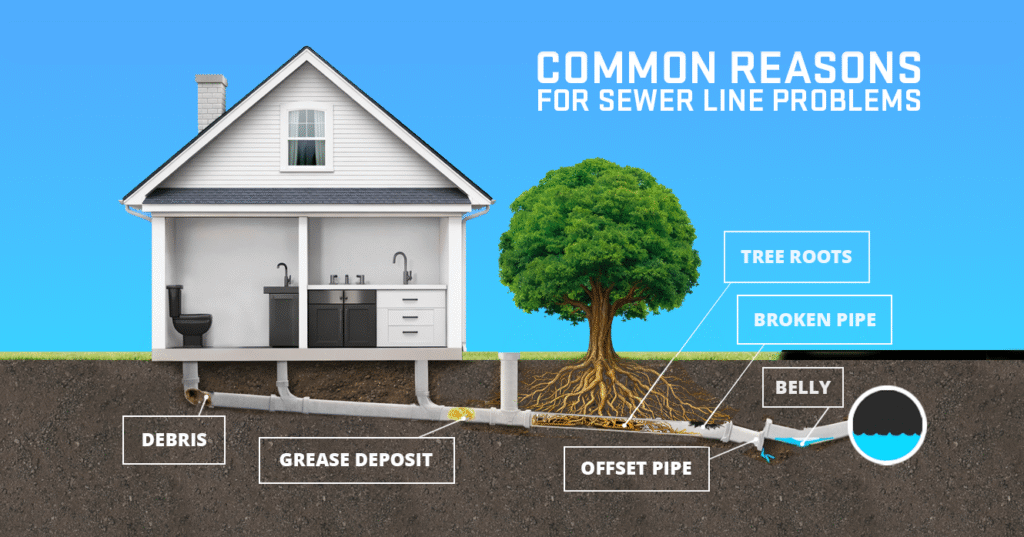
When homeowners across Northeast Ohio start experiencing slow drains, foul odors, or unexpected basement water, the issue will sometimes trace back to one place – your sewer line. At Engineered Waterproofing, we’ve seen firsthand how small, hidden problems can quickly escalate into costly repairs if left untreated.
Understanding the most common causes of sewer line issues can help you take action early, protect your home, and avoid major disruptions.
1. Tree Root Intrusion
Tree roots are one of the leading causes of sewer line damage in Northeast Ohio. Roots naturally seek moisture, and even the smallest crack or joint in your pipe can attract them.
Once inside, roots expand and create blockages that restrict water flow – or completely stop it. Over time, they can even break apart sections of pipe.
- Slow draining sinks or tubs
- Gurgling noises
- Frequent backups
2. Pipe Corrosion (Especially Cast Iron)
Many older homes in the Cleveland area still rely on cast iron sewer pipes. While durable, these pipes naturally corrode over time – even without external damage.
As corrosion progresses:
- The interior of the pipe becomes rough
- Flow is restricted
- Leaks and eventual failure occur
This process can take decades, but once it starts, it accelerates quickly. If your home is 30–50+ years old, this is a major risk factor.
3. Offset or Misaligned Pipes
Ground movement, settling foundations, and freeze-thaw cycles (common in Northeast Ohio) can cause sections of your sewer line to shift out of alignment.
An “offset pipe” creates a disruption in flow where waste gets caught, leading to recurring clogs and backups.
Common causes:
- Soil shifting
- Poor installation
- Heavy surface loads (like driveways or vehicles)
4. Grease & Debris Buildup
Everyday materials like grease, soap residue, and food waste can build up along the walls of your pipes over time.
Unlike a sudden clog, this buildup happens gradually – narrowing the pipe until water flow is severely restricted.
Important note:
Even if you don’t pour grease down the drain, small amounts from dishes accumulate over time.
5. Cracked or Collapsed Pipes
Sewer lines can crack due to:
- Age
- External pressure
- Temperature changes
In more severe cases, pipes can fully collapse, stopping all drainage and requiring immediate repair or replacement.
This is especially common in older clay or deteriorated cast iron systems.
6. Blockages from Foreign Objects
Items that should never go down the drain – like wipes, paper towels, hygiene products, or excessive toilet paper – can create major obstructions.
Unlike toilet paper, these materials don’t break down easily and can get stuck in bends or damaged sections of pipe.
Why This Matters for Your Basement
Sewer line problems don’t just stay underground – they often show up inside your home.
Many basement water issues we see in Cleveland aren’t just groundwater problems – they’re tied directly to:
- Backed-up sewer lines
- Poor drainage flow
- Overloaded systems during heavy rain
That’s why sewer health is a critical part of any complete waterproofing and drainage solution.
Professional Solutions That Work
At Engineered Waterproofing, we approach sewer and drainage issues with long-term solutions – not temporary fixes.
Hydro Jetting
Hydro jetting is a powerful solution we offer to fully clear and restore your sewer lines. Using high-pressure water, this service safely removes years of buildup – including grease, sludge, scale, and even tree roots – from the inside of your pipes. Unlike temporary fixes that only open a small path, hydro jetting cleans the entire pipe wall, improving flow and helping prevent future clogs. It’s an ideal option for homeowners dealing with recurring backups or slow drainage, and it often serves as a key step in preparing pipes for sewer line restoration or inspection.
What Is Sewer Line Restoration?
Sewer line restoration involves repairing and reinforcing your existing pipes without full replacement whenever possible. This can include:
- Removing root intrusion
- Repairing cracks or minor issues
When Full Replacement Is the Right Choice
For sewer lines that are severely damaged, collapsed, or beyond repair, a full replacement may be the most reliable long-term solution. Sewer line replacement involves removing the failing pipe and installing a new system designed to handle modern demands and prevent recurring issues. This option is often recommended when there is extensive corrosion, large breaks in the pipe, or cracks that restoration cannot fully address. While it is a larger upfront cost, a full replacement provides peace of mind by eliminating ongoing problems, improving flow efficiency, and ensuring your home’s plumbing system is built to last for decades.
Sewer Camera Inspections
We use advanced camera inspections to:
- Identify root intrusion
- Locate cracks or offsets
- Diagnose issues without excavation
Waterproofing Integration
It should go without saying, but we also ensure your interior drainage systems, sump pumps, and exterior grading all work together to prevent future problems.
Protect Your Home Before Problems Get Worse
Sewer line issues rarely fix themselves – and waiting too long can lead to:
- Basement flooding
- Structural damage
- Expensive emergency repairs
If you’re noticing signs like slow drains, odors, or recurring backups, it’s time to take a closer look.
Get Expert Help in Northeast Ohio
Engineered Waterproofing proudly serves homeowners across Cleveland, Akron, and Canton with:
- FREE Sewer line inspections
- Drain cleaning & hydro jetting services
- Basement waterproofing solutions
Schedule a free inspection today and get a clear, honest assessment of your system.
FAQ: Sewer Line Problems
How do I know if my sewer line is the issue?
Look for slow drains throughout the house, gurgling sounds, foul odors, or backups in multiple fixtures.
How often should sewer lines be cleaned?
Typically every 1–2 years for older homes, though this depends on usage and pipe condition.
Can sewer problems cause basement flooding?
Yes, especially during heavy rain when systems become overloaded or blocked.
Are older homes more at risk?
Absolutely. Cast iron and clay pipes are far more prone to corrosion, cracking, and root intrusion.